
Thomas Shutt - Asteroseismologist and award-winning teacher, University of York
From the hydrogen born in the Big Bang to the elements synthesised in ancient stars, the chemical foundations of life on Earth were forged long before our planet existed. In this talk, we will explore where those cosmic ingredients came from, and how they came together to form our solar system and make Earth the fertile, enduring home for life that it is.
We will examine what makes our planet so remarkable, and the likelihood of similar conditions arising elsewhere. Looking beyond our solar system, we’ll explore distant exoplanets, the environments they inhabit, and the challenges life may face on worlds very different from our own. Even if life exists elsewhere, what do the vast distances and cosmic timescales mean for our chances of ever encountering intelligent civilisations?
In so doing, we will consider one of our most profound questions: are we a rare cosmic accident, or is life a natural outcome of a universe rich in stars and planets?
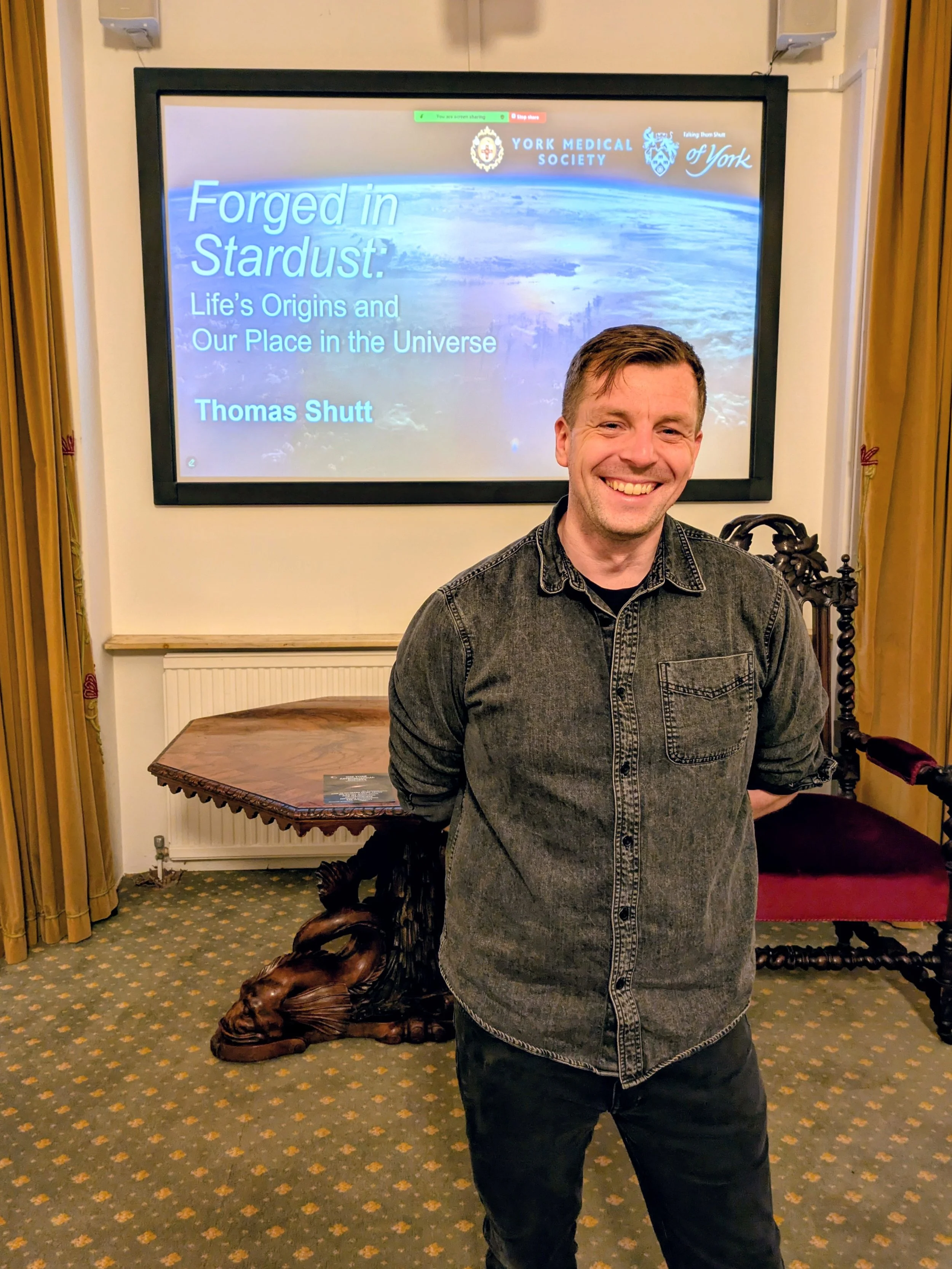

Vote of thanks by Prof Barry Wright
Thomas Shutt is completing his PhD at York University and as an award winning teacher and communicator returned to talk at York Medical Society about the scientific and biological knowledge currently available to explain how life is thought to have emerged in the Universe. Thomas’s own specialty is asteroseismology. This is the study of what is inside a star (below the surface) from the external signals emitted. But he went much further on this cold and wet Friday evening, exploring how helium was created from hydrogen through fusion reactions in stars and then how bigger and more powerful fusion reactions took place in bigger and bigger stars creating larger elements. He then touched on how various other planetary behaviors and interactions led to creation of more complex elements, many of which are found in living things on earth. Whilst physicists and scientists have conducted experiments that successfully created amino acids and other molecules from molecular soups, no experiment has yet created new life from these molecular soups. He then touched on the vast number of galaxies in our universe (200 billion - 2 trillion) explaining that if each galaxy had a habitable planet in its system this creates the conditions (and probability) for possible forms of life elsewhere. One huge problem for us however is communicating with them. The nearest major galaxy to us is Andromeda which is 2.5 million light years away. Earth’s radio signal messages sent in their direction (through electromagnetic radiation) would take 2.5 million years to reach them and if they sent messages back at the speed of light we wouldn’t hear back for 5 million years, at which point we may not be around anymore! All in all, it was a very enjoyable and informative evening and taught us many new things, not least how relatively small we are compared to our huge and complex Universe.
At the end of the talk several audience members asked challenging questions all of which were answered comprehensively by Thomas.
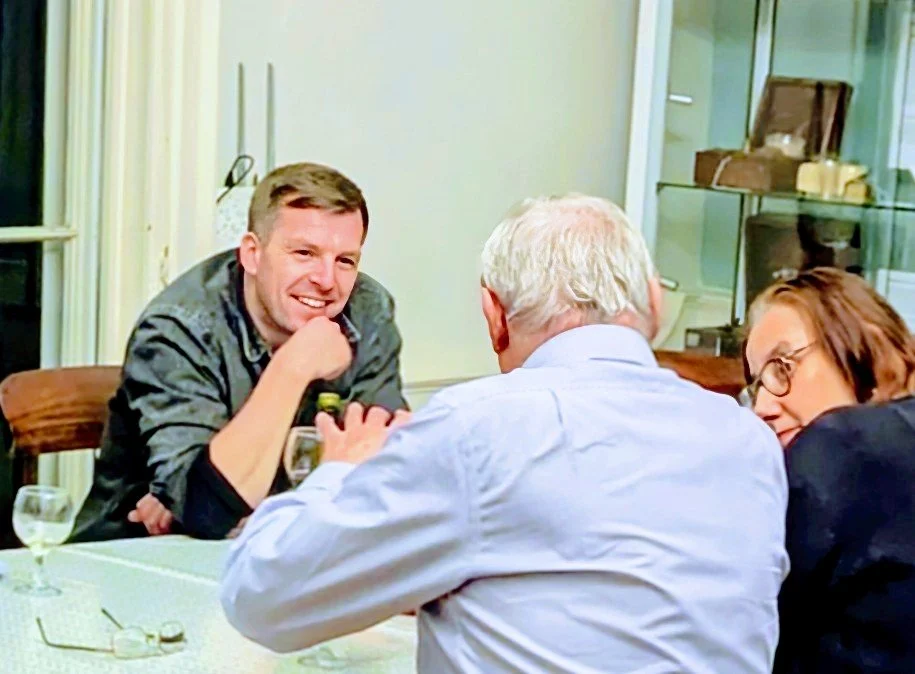
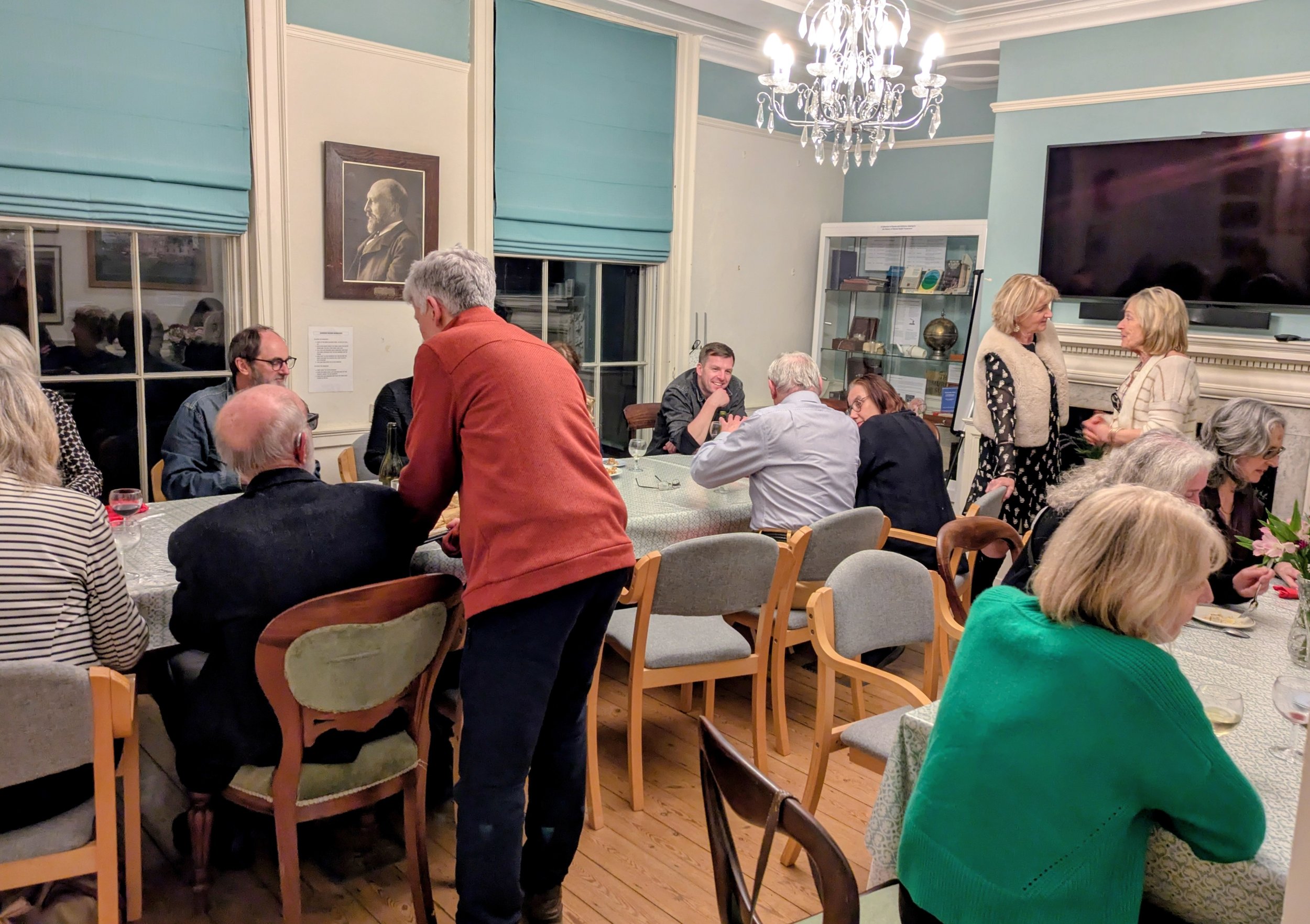
Prof Barry Wright gave a vote of thanks before many present retired to supper in the rooms.